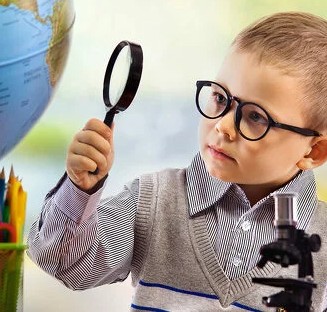
Space is one of the most fascinating subjects humans can explore. The Moon shining in the night sky, the stars scattered across the darkness, and the planets moving around the Sun inspire questions about how the universe works. Even a simple look at the sky can encourage us to wonder what exists beyond our planet and how everything began.
Learning about space offers more than interesting facts about distant worlds. It encourages people to ask questions, investigate unfamiliar ideas, and develop a deeper understanding of science. From discovering how planets move to exploring the possibility of life beyond Earth, space science creates opportunities for curiosity, creativity, and lifelong learning.
Whether someone is a student, a teacher, or simply interested in the natural world, exploring the universe can make science more exciting and meaningful. It reminds us that many important discoveries begin with a simple question and a willingness to search for an answer.
Discovering the Wonders of the Universe
One reason space inspires scientific curiosity is the extraordinary variety of objects and phenomena found throughout the universe. Our solar system contains planets, moons, asteroids, and comets, while the wider universe includes billions of galaxies containing stars and other celestial objects.
Each discovery creates opportunities to learn something new. Understanding why Earth has liquid water on its surface, how Saturn’s rings formed, or why stars appear to change brightness can lead to further questions about physics, chemistry, and the conditions needed for different environments to exist.
For example, studying Mars raises questions about its ancient environment and whether it once had conditions suitable for microbial life. Exploring the icy moons of the outer solar system encourages scientists to investigate whether liquid water might exist beneath their surfaces.
These questions do not always have immediate answers. Sometimes scientists gather evidence for many years before reaching a clearer conclusion. That uncertainty makes space exploration especially interesting because each new observation can improve our understanding and introduce new possibilities for research.
By discovering the wonders of the universe, learners begin to see science as an ongoing journey rather than a collection of facts to memorize.
Encouraging Questions and Independent Thinking
Scientific curiosity often begins when something seems surprising or unfamiliar. Space provides countless opportunities for asking questions that challenge our everyday assumptions.
Why does the Moon appear to change shape throughout the month? Why do planets follow predictable paths across the sky? How can a spacecraft travel through space for years and still reach a distant destination?
Questions like these encourage learners to investigate rather than simply accept an explanation. They can begin by studying basic concepts, comparing different explanations, and exploring observations that help clarify what is happening.
For example, the phases of the Moon may seem confusing until learners understand how sunlight illuminates the Moon as it moves around Earth. Observing the Moon over several weeks can help connect the explanation with a real astronomical pattern.
This process develops independent thinking. Instead of depending entirely on someone else’s answer, learners discover how to ask useful questions, look for evidence, and decide whether an explanation makes sense.
Space science also teaches an important lesson about uncertainty. Scientists sometimes revise their explanations when new observations become available. Recognizing that knowledge can improve with evidence encourages learners to remain open-minded and continue investigating unfamiliar subjects.
Understanding the Value of Scientific Observation
Exploring space helps demonstrate why careful observation is essential to scientific discovery. Most celestial objects are too distant for people to examine directly, so scientists use telescopes, spacecraft, satellites, and other instruments to collect information.
Telescopes allow researchers to observe objects across different wavelengths of light, revealing details that cannot be seen with the unaided eye. Spacecraft can travel to other planets, collect measurements, photograph surfaces, and study their surrounding environments.
These observations help scientists develop and test explanations about the universe. For example, studying the light from distant stars can provide information about their temperatures, chemical composition, and movement. Observing changes in a star’s brightness may also help researchers identify planets orbiting it.
The process shows that scientific knowledge depends on evidence, not merely imagination. A fascinating idea may inspire an investigation, but careful measurements and observations are needed to determine whether the idea is supported.
Learning how astronomers gather information can help students appreciate the methods used in science more broadly. The same principles of observation, measurement, and evidence are useful when investigating plants, weather, ecosystems, and many other subjects on Earth.
Connecting Space Science With Everyday Life
Although space may seem far removed from everyday experiences, discoveries about the universe are connected to many technologies and scientific principles that affect daily life.
Satellites support navigation, communication, weather monitoring, and environmental observation. Information collected from space can help researchers track storms, observe changes in forests, monitor oceans, and study conditions across large areas of Earth.
Learning about these applications helps people understand that space science is not limited to exploring distant planets. It can also contribute to practical services and improve our knowledge of the environment.
Space exploration involves many scientific fields, including mathematics, engineering, physics, chemistry, and computer science. Calculating a spacecraft’s trajectory requires mathematical models, while designing instruments involves understanding materials, energy, and how equipment behaves under challenging conditions.
These connections can make science more relevant to students who enjoy solving practical problems. Someone interested in computers might discover how software processes astronomical observations. Another learner may become fascinated by the engineering required to build a rover that can operate on another planet.
By connecting space exploration with familiar technologies and useful skills, educators can show how scientific knowledge influences everyday life.
Inspiring the Next Generation of Scientists
Learning about space can encourage young people to explore science, technology, engineering, and mathematics. Images of planets, discoveries made by spacecraft, and explanations of distant galaxies can make complicated subjects feel exciting and approachable.
A student who enjoys learning about the Moon might begin exploring astronomy, then develop an interest in optics, mathematics, or physics. Another student fascinated by spacecraft may discover an interest in robotics, computer programming, or mechanical engineering.
Not every learner who enjoys space will become a professional scientist, and that is perfectly fine. The value of curiosity extends beyond a particular career. It helps people develop reasoning skills, investigate questions, and approach unfamiliar challenges with greater confidence.
Teachers and families can encourage this interest by supporting questions, providing accessible educational resources, and helping learners explore simple astronomy activities. Observing the Moon, identifying bright planets with a reliable sky guide, or learning how eclipses occur can provide meaningful starting points.
The goal is not to make every learner memorize complicated astronomical details. It is to help them discover the enjoyment of asking questions and gradually developing a deeper understanding of the universe.
Learning About Space Encourages Creativity
Scientific exploration depends on more than collecting measurements. Scientists must also develop ideas about what those measurements mean and imagine ways to investigate questions that have not yet been answered.
Space offers plenty of opportunities for this kind of creative thinking. Researchers design instruments to operate in distant environments, develop methods for studying objects millions or billions of light-years away, and plan missions that must function under conditions people cannot easily reproduce on Earth.
For students, imagining how a spacecraft might explore another world can introduce questions about energy, communication, materials, temperature, and movement. Designing a model of a solar system can help learners think about scale, distance, and the arrangement of celestial objects.
Creativity and evidence work together in scientific learning. Imagination helps generate questions and possible explanations, while observation and testing help determine which ideas are supported.
This combination encourages learners to explore possibilities without confusing an interesting idea with an established scientific fact. They can enjoy imagining what might exist elsewhere in the universe while learning why scientific claims need reliable evidence.
Understanding Earth’s Place in the Universe
Studying space can also help people appreciate Earth and the conditions that support life. Our planet has a particular combination of characteristics, including liquid water at the surface, a protective atmosphere, and a suitable range of temperatures, that make it an especially important place to study.
Comparing Earth with other planets helps scientists understand how different environments develop. Venus has an extremely hot surface and a dense atmosphere, while Mars is colder and has a much thinner atmosphere than Earth. Examining these differences helps researchers investigate how planetary conditions influence surface environments.
Space observations also provide information about changes taking place on Earth. Satellites can monitor vegetation, clouds, sea ice, and other environmental features, helping scientists study patterns across large regions.
Learning about these connections encourages curiosity about our own planet as well as distant worlds. It reminds us that understanding space is also a way to investigate Earth’s history, environment, and place within the wider solar system.
How Anyone Can Begin Exploring Space Science
You do not need an expensive telescope or advanced scientific training to begin learning about the universe. Many people start by observing the night sky, reading reliable educational articles, or watching explanations from established astronomy and science organizations.
Begin with questions that interest you. You might explore why the Moon has phases, how the seasons occur, or what makes the planets different from one another. As your understanding grows, you can investigate more advanced topics, such as the life cycle of stars, black holes, or the search for planets around other stars.
A simple notebook can help you record observations and questions. You can note the Moon’s appearance on different evenings or compare how its position changes over time. Reliable sky maps and astronomy applications may also help you identify celestial objects, provided you use them appropriately.
Most importantly, remain patient and curious. Some concepts require more time to understand, and some scientific questions are still being investigated. You do not need to know every answer to enjoy learning about space.
Conclusion
Learning about space inspires scientific curiosity by introducing extraordinary discoveries, encouraging thoughtful questions, and showing how observation and evidence help us understand the universe. It connects mathematics, physics, engineering, and other scientific fields while revealing practical applications that influence everyday life.
Space exploration also encourages creativity, independent thinking, and a deeper appreciation of Earth. Every new discovery creates opportunities to ask further questions, investigate unfamiliar ideas, and improve our understanding of the natural world.
You can begin exploring the universe through simple observations, educational resources, and questions about the objects visible in the sky. As you learn more, familiar sights such as the Moon and stars can become reminders of how much there is still to discover.
Scientific curiosity begins with the willingness to ask questions and search for reliable answers. By exploring space with an open mind and an appreciation for evidence, people of all ages can experience the excitement of discovery and make learning a lifelong adventure.