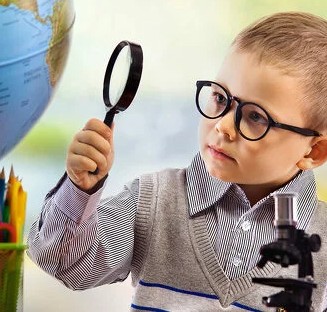
Many important scientific discoveries begin with something surprisingly ordinary. A plant growing toward a window, water collecting on a cold glass, or an object falling to the ground can inspire questions about how the world works. These everyday experiences may seem unremarkable, but when someone looks at them carefully and asks why they happen, they can become the starting point for scientific investigation.
Scientific discovery does not always begin with expensive equipment or complicated experiments. Sometimes it starts with curiosity, patience, and the willingness to notice details that other people overlook. By observing patterns, asking questions, and looking for reliable explanations, people can turn simple experiences into opportunities to develop knowledge.
Understanding how observation contributes to science helps us appreciate the importance of curiosity in everyday life. It also shows that anyone can begin exploring scientific ideas by paying closer attention to the world around them.
Why Observation Is the First Step in Discovery
Observation involves gathering information through the senses or using tools to measure and record what happens. Scientists observe changes in temperature, the movement of objects, the growth of living things, and countless other processes to understand the natural world.
For example, imagine noticing that a puddle disappears more quickly on a sunny afternoon than it does in a shaded area. This simple observation can lead to questions about temperature, sunlight, wind, and evaporation. Instead of assuming there is only one explanation, a curious observer can investigate which conditions may influence how quickly the water disappears.
Observation helps scientists identify something worth investigating. It provides an initial description of what is happening before they begin developing explanations.
Careful observation also requires attention to detail. Two situations that look similar may differ in important ways. A plant receiving more sunlight may also be growing in different soil, while two containers of water may have different starting temperatures. Recognizing these differences helps people avoid drawing conclusions too quickly.
By learning to observe carefully, we develop the foundation for asking better questions and investigating how different parts of the world interact.
How Everyday Questions Lead to New Ideas
Curiosity often begins when we notice something unexpected or encounter a situation we do not fully understand. Asking questions helps turn that curiosity into a direction for investigation.
Why does ice melt faster in some places than others? Why do certain leaves change color during particular seasons? Why does a shadow become longer at some times of day and shorter at others? Each question opens an opportunity to explore a scientific principle.
A question becomes especially useful when it can be investigated through observation, measurement, or reliable evidence. For example, someone interested in plant growth might ask whether the amount of light affects how quickly a particular plant develops. This question can guide an investigation involving carefully observed plants and recorded growth.
Not every question produces an immediate answer. Sometimes an initial observation leads to several additional questions that require more research. That is a normal part of scientific learning.
Questions also help us recognize the limits of our existing knowledge. Instead of treating uncertainty as a problem, we can use it as a reason to learn more. Many scientific investigations begin precisely because someone realizes that a familiar event is not yet fully understood.
Recognizing Patterns in Nature
One observation can be interesting, but patterns across many observations often provide stronger clues about how something works. When people notice that similar events occur under comparable conditions, they can begin investigating whether a meaningful relationship exists.
For example, someone who regularly observes the sky may notice that the Moon appears to change shape throughout the month. By recording its appearance over several weeks, they can recognize a repeating pattern. Further investigation reveals that the Moon’s phases result from changes in the portion of its sunlit side visible from Earth as the Moon orbits our planet.
Gardeners can also recognize patterns by observing how plants respond to watering, light, or seasonal changes. These observations may suggest questions about the conditions that support healthy growth.
However, recognizing a pattern does not automatically explain its cause. Two events may occur together without one directly causing the other. Additional observations or carefully designed experiments may be needed to determine what is happening.
This distinction is important because scientific thinking involves more than noticing similarities. It requires examining evidence and considering other possible explanations before deciding what a pattern means.
Testing Observations Through Simple Experiments
Once an observation raises an interesting question, an experiment can help investigate possible explanations. A useful experiment identifies what will be examined, establishes a reasonable method, and records the results carefully.
Imagine someone wondering whether sunlight affects the growth of a particular plant. They could observe similar plants placed under different lighting conditions while keeping other factors, such as watering and soil type, as consistent as possible. Measuring growth regularly would provide information for comparison.
If the plants develop differently, the results may provide clues about the influence of light. However, the observer should also consider the limitations of the investigation, including the number of plants, the duration of the observation, and whether other conditions differed.
Simple experiments do not always produce clear results. Sometimes the differences are too small to interpret confidently, or an unexpected factor influences the outcome. Repeating an investigation or improving the method may help clarify what happened.
The purpose is not to force an experiment to produce a preferred answer. It is to gather useful evidence and determine whether the observations support the proposed explanation.
Learning From Unexpected Results
Scientific observations do not always match what people expect. An experiment may produce a surprising outcome, a measurement may differ from an earlier result, or an event may occur for a reason that was not considered initially.
These situations can be valuable because they encourage investigators to reconsider their assumptions. If the results do not support an original idea, the next step is to examine the evidence rather than ignore it.
For example, a student might expect a plant receiving more water to grow faster. If the plant instead becomes unhealthy, the observation may prompt further investigation into waterlogged soil, root health, and the plant’s actual water requirements.
The unexpected result reveals that the original explanation may have been incomplete. It also creates an opportunity to ask a more precise question and improve the investigation.
Mistakes can offer similar lessons. A measurement taken incorrectly may reveal the need for a more reliable instrument or a clearer procedure. Recognizing and correcting errors improves the quality of future observations.
This willingness to learn from unexpected results is one of the most important habits in science. Discoveries often depend on noticing when reality differs from what we assumed would happen.
How Small Observations Can Have Wider Scientific Value
An individual observation may seem limited, but observations collected over time can contribute to a broader understanding of the natural world. Scientists often combine measurements from different locations, periods, or research teams to identify patterns that would be difficult to recognize from a single example.
For instance, long-term temperature records from many weather stations help researchers investigate changes in regional and global climate. Observations of birds, insects, and plants can contribute to knowledge about ecosystems and changes in the distribution of species.
Astronomy offers another example. Scientists observe the light from distant stars and compare measurements to investigate their temperatures, movement, and chemical properties. Careful observations of small changes in brightness can also help researchers identify planets orbiting other stars.
In these cases, the value of an observation increases when it can be checked, compared, and interpreted alongside other reliable evidence.
Scientific discoveries rarely depend on observation alone. They often require measurement, analysis, existing knowledge, and collaboration. Nevertheless, careful observations provide much of the information that allows scientists to develop and refine their explanations.
The Importance of Recording What You Observe
Observations are more useful when they are recorded clearly. Human memory can be incomplete, especially when details change over time. Writing down measurements, describing conditions, and noting when something happened can make it easier to compare results later.
For example, someone studying the growth of a garden plant might record its height every few days, along with notes about watering and sunlight. Reviewing the record may reveal changes that were difficult to notice from one day to the next.
Photographs can also provide useful records when they are taken consistently and accompanied by information about the conditions. Measurements, dates, and written descriptions help explain what each image represents.
Accurate records should reflect what actually happened rather than what the observer hoped to discover. It is important to include results that do not support an initial prediction because those results may reveal useful information.
When observations are clearly documented, other people can better understand the investigation and assess whether the conclusions are reasonable. This makes scientific knowledge more transparent and easier to build upon.
Developing Scientific Curiosity in Everyday Life
Anyone can practice observation without having access to a professional laboratory. Everyday surroundings provide countless opportunities to notice changes, ask questions, and investigate explanations using safe and appropriate methods.
You might observe how shadows move throughout the day, compare how different materials retain heat, or record the appearance of the Moon across several evenings. A gardener could keep notes about plant growth, while someone interested in cooking might explore how temperature influences the texture of food.
Reliable educational resources can help explain the principles behind these observations. When investigating a question, it is useful to compare your initial ideas with trustworthy sources and avoid assuming that one personal experience establishes a general rule.
Safety should always come first. Some investigations require supervision or specialized equipment, and potentially hazardous activities should not be attempted without appropriate guidance.
The most important habit is to remain curious. You do not need to discover something completely new to science to benefit from scientific thinking. Learning why an ordinary event occurs is already a valuable achievement because it strengthens your understanding and encourages further exploration.
Conclusion
Simple observations can lead to scientific discoveries because they encourage people to notice patterns, ask questions, test explanations, and learn from evidence. Everyday experiences often contain clues about larger scientific principles, from the growth of plants to the movement of the Moon and changes in the environment.
The discovery process takes more than curiosity alone. Careful observation, accurate records, suitable experiments, and a willingness to revise assumptions all help turn an interesting question into a more reliable explanation.
You can begin by choosing something familiar, observing it closely, and asking why it happens. Explore possible explanations, consult trustworthy information, and record what you learn.
By approaching everyday experiences with an open mind and a thoughtful interest in evidence, you can develop stronger scientific thinking skills and discover that the world around you offers countless opportunities to learn.