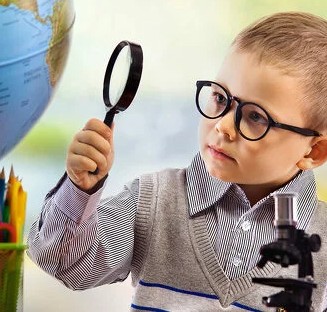
Science helps us understand how the world works, from the growth of plants to the movement of planets and the behavior of everyday materials. Reading books and listening to explanations can introduce important scientific ideas, but experiencing how those ideas work in practice can make learning even more meaningful. This is why experiments play such an important role in scientific education.
Experiments give learners opportunities to ask questions, test ideas, observe results, and develop explanations based on evidence. They turn abstract information into practical experiences that can be explored and discussed. Whether students are investigating how light affects plant growth or observing how temperature changes the state of water, experiments encourage curiosity and active participation.
Understanding why experiments matter can help students, teachers, and lifelong learners appreciate science as more than a collection of facts. It is a continuing process of discovery that encourages people to investigate questions and learn from the world around them.
Turning Scientific Ideas Into Practical Experiences
One of the greatest benefits of scientific experiments is that they connect theory with real-world observations. A textbook may explain a scientific principle clearly, but an experiment allows learners to see evidence of that principle in action.
For example, students learning about evaporation may read that liquid water changes into water vapor. They can develop a deeper understanding by observing how water gradually disappears from a shallow container under different environmental conditions. The observation gives them a practical example of the process described in the lesson.
Experiments can also help explain concepts that are difficult to imagine. A simple activity involving magnets can demonstrate how magnetic forces act on certain materials. Observing shadows at different times of day can help learners explore the relationship between sunlight, objects, and the appearance of shadows.
These activities help make scientific ideas more concrete and memorable. They also provide opportunities for students to connect what they observe with information they have learned from books, teachers, and educational resources.
Encouraging Curiosity and Asking Questions
Curiosity is an important starting point for scientific learning. When students notice something unexpected, they often want to understand why it happened. Experiments provide a structured way to investigate these questions rather than relying entirely on guesses.
Imagine a student who notices that two similar plants appear to grow at different rates. This observation could lead to questions about sunlight, water, temperature, or soil conditions. An experiment can help the student investigate one possible explanation and observe whether the results support it.
The questions do not always need to be complicated. Simple questions about everyday events can lead to valuable discoveries. Why does ice melt faster in some places than others? How does the amount of light affect a plant? Why do certain objects float while others sink?
By encouraging students to ask questions and explore possible answers, experiments help develop a lasting interest in learning. Students begin to see that science is not limited to classroom textbooks. It is a way of investigating the many interesting processes they encounter in everyday life.
Developing Critical Thinking Skills
Experiments help students develop critical thinking by encouraging them to examine evidence before reaching conclusions. Rather than accepting an explanation simply because it sounds reasonable, learners can investigate whether their observations support it.
A well-designed experiment begins with a clear question and a possible explanation that can be tested. The learner considers what to observe, which conditions to measure, and how to record the results. After completing the activity, the evidence can be compared with the original idea.
For example, a student might predict that a plant receiving more light will grow taller than a similar plant receiving less light. To explore this question fairly, the student would need to consider other factors, such as water, soil, and the plants’ initial condition. If several factors change at the same time, it may be difficult to determine which one influenced the results.
This process teaches learners to think carefully about evidence and recognize the importance of fair comparisons. It also helps them understand that a prediction is not the same as a proven conclusion.
Critical thinking becomes especially valuable when students discover that the results do not match their expectations. Instead of ignoring the evidence, they can examine what happened and consider whether their original explanation needs to be revised.
Learning From Mistakes and Unexpected Results
Not every experiment produces the expected result, and this is an important part of scientific learning. An unexpected observation may reveal that an assumption was incorrect, that an important factor was overlooked, or that the experiment needs improvement.
For instance, students investigating plant growth might discover that their results differ from what they predicted. Rather than viewing the activity as a failure, they can review their records, examine the growing conditions, and consider whether the differences affected the outcome.
This approach teaches an important lesson: learning is not only about getting the expected answer. It is also about understanding why an outcome occurred.
Mistakes can reveal gaps in knowledge and provide opportunities to improve experimental methods. Students may learn to measure more carefully, record observations more consistently, or repeat an activity to determine whether the results are similar.
Developing this attitude can also build patience and confidence. Learners become more comfortable exploring unfamiliar questions because they understand that unexpected outcomes are part of investigation. They learn to treat mistakes as useful information rather than reasons to stop trying.
Improving Observation and Data Collection
Scientific experiments teach learners how to observe carefully and organize information. These skills are important because reliable conclusions depend on the quality of the evidence collected.
During an experiment, students may record measurements, describe changes, take photographs, or organize results in a table. This information helps them compare observations and understand what happened throughout the activity.
For example, when investigating how quickly ice melts under different conditions, students could record the starting time and the time at which each sample has melted. They could then compare the results and consider whether differences in temperature or surrounding conditions may explain the pattern.
Careful data collection also encourages consistency. Recording observations immediately can reduce the risk of forgetting important details or unintentionally changing the results when writing them down later.
Graphs and charts can help make collected information easier to interpret. Students may identify a pattern more clearly when measurements are displayed visually rather than recorded only as separate numbers.
These skills are useful beyond science classes. Observation, measurement, and organized recordkeeping are valuable in subjects such as geography, mathematics, environmental studies, and many practical activities.
Connecting Scientific Learning With Everyday Life
Experiments help learners recognize that scientific principles are relevant to everyday experiences. Many familiar activities involve scientific processes, even when people do not immediately notice them.
Cooking, gardening, cleaning, and observing the weather can all raise questions about physical and natural processes. For example, learners can explore how different materials absorb heat, observe how water moves through soil, or investigate why condensation appears on a cold surface.
These experiences make science more relatable because they connect classroom knowledge with situations students already understand. A concept may become easier to remember when the learner can associate it with a familiar observation.
Everyday investigations can also encourage people to take a closer interest in their surroundings. Instead of seeing ordinary events as unimportant, they may begin asking questions about how and why those events occur.
However, everyday observations should still be interpreted carefully. A single observation may not provide enough evidence to establish a general rule. Comparing results, checking reliable explanations, and considering other possible causes help learners develop a more accurate understanding.
Building Cooperation and Communication Skills
Many educational experiments involve working with classmates or other learners. Group activities encourage students to share responsibilities, discuss predictions, compare observations, and explain their conclusions.
For example, one student might measure materials while another records the results. Other group members may monitor the procedure or help interpret the findings. Working together allows learners to contribute different ideas and learn from one another’s observations.
Experiments also provide opportunities to practice explaining information clearly. Students need to describe what they did, how they collected their evidence, and why they reached a particular conclusion. Listening to other explanations can reveal details they may have overlooked.
Respectful discussion is important when group members disagree. Rather than deciding which person is correct based on confidence or popularity, students can examine the evidence and discuss how their interpretations differ.
These experiences help develop communication, teamwork, and problem-solving skills that are useful in education, employment, and everyday life.
Making Experiments Safe and Meaningful
Although experiments provide valuable learning opportunities, they should be planned carefully. The activities must be appropriate for the learners’ age, knowledge, and available equipment. Teachers and other responsible adults can help ensure that instructions are clear and potential hazards are understood.
Simple investigations can often demonstrate important scientific principles without requiring complicated materials. Observing shadows, comparing how quickly different objects cool, or tracking the growth of plants can provide useful learning experiences when the activities are properly designed.
More advanced experiments may require specialized equipment, protective measures, or expert supervision. Learners should follow appropriate instructions and avoid mixing unknown substances, using unfamiliar equipment without guidance, or carrying out activities that could cause injury.
It is also important to record results honestly rather than changing observations to match an expected answer. Accurate records make it possible to evaluate what happened and identify limitations in the investigation.
A meaningful experiment is not defined by how complicated it appears. Its value comes from the quality of the question, the care taken during the process, and the understanding gained from examining the results.
Conclusion
Experiments are important in scientific learning because they connect theory with practical experience, encourage curiosity, develop critical thinking, and help learners understand the role of evidence. They also teach students to observe carefully, record information, communicate findings, and learn from unexpected results.
The process of investigating a question can be just as valuable as discovering an answer. When students make predictions, test ideas, examine their observations, and revise their explanations, they develop skills that support learning across many subjects.
You do not need a complicated laboratory to experience the benefits of scientific investigation. With suitable guidance and safe activities, everyday observations can provide opportunities to explore meaningful questions.
By approaching experiments with curiosity, patience, and an open mind, learners can develop a deeper understanding of the world and discover that science is not simply about remembering facts. It is about asking thoughtful questions, examining evidence, and continuing to learn through discovery.