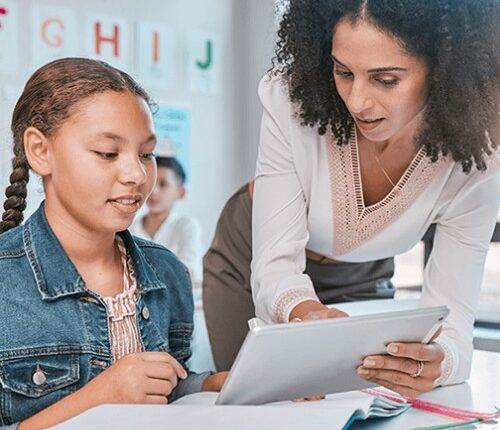
Artificial intelligence is becoming an increasingly visible part of modern education. From personalized learning tools and digital assistants to automated feedback and educational software, AI is creating new ways for students and teachers to approach learning.
Artificial intelligence, often called AI, refers to computer systems designed to perform tasks that normally require forms of human intelligence, such as recognizing patterns, processing information, generating content, and responding to questions. In education, these capabilities can provide additional support for teaching, studying, research, and organization.
AI does not need to replace teachers or traditional educational methods. Instead, it can serve as another tool that supports learning when used carefully and responsibly. Understanding how AI is changing education can help students, educators, and families make thoughtful decisions about using new technology.
Supporting Personalized Learning
Students do not all learn at the same pace or in exactly the same way. Some may understand a concept quickly, while others may need additional explanations and practice.
AI-powered learning systems can sometimes adjust activities based on a learner’s responses. A student who struggles with a particular topic may receive additional practice, while another learner may move toward more advanced material.
Personalized learning can give students opportunities to spend more time where they need it most. However, teachers remain important for understanding the broader needs and development of each student.
Providing Quick Explanations
AI tools can provide explanations of many common educational topics. Students may ask a question and receive an immediate response, which can be useful when they are studying independently.
A learner working on a difficult subject can use an AI tool to request a simpler explanation or an example. This may help the student approach the topic from another perspective.
At the same time, students should learn to check important information using trustworthy educational resources because AI-generated responses can sometimes contain mistakes or incomplete explanations.
Helping Teachers Prepare Lessons
AI can also support teachers with lesson preparation. Educators may use digital tools to brainstorm examples, organize ideas, create practice questions, or develop different ways to present a topic.
These tools can reduce some routine preparation work and give teachers more options for designing lessons.
The teacher remains responsible for deciding whether generated material is appropriate, accurate, and suitable for the students. Human judgment is especially important when educational content requires context or careful explanation.
Creating Additional Practice Opportunities
Practice is an important part of learning, and AI can help generate exercises based on a particular topic. A student studying mathematics, language, writing, or another subject may request practice questions and then work through them.
Additional exercises can provide more opportunities to apply knowledge.
The value of this practice depends on the quality of the questions and the student’s willingness to think through the answers. AI should support active learning rather than encourage students to avoid doing the work themselves.
Improving Feedback
Some AI systems can provide feedback on writing, answers, or other educational activities. This can help students identify possible areas for improvement.
For example, an AI tool might point out unclear wording in a draft or explain why a practice answer needs further attention.
AI feedback should generally be treated as an additional perspective rather than a final judgment. Teachers and educators can provide context and personalized guidance that automated systems may not fully understand.
Supporting Language Learning
AI can be particularly useful for language practice. Students may use digital tools to explore vocabulary, grammar, sentence structure, and conversation examples.
Interactive language tools can provide opportunities to practice regularly without requiring another person to be available every time.
However, real communication involves tone, culture, context, and human interaction. AI can support language learning, but conversation with teachers and other people remains an important part of becoming a confident communicator.
Encouraging Independent Study
AI can make independent learning more accessible. Students can use educational tools to explore questions, summarize material, generate practice activities, and organize study plans.
This can encourage learners to take greater responsibility for their education.
Independent learning works best when students remain involved in the thinking process. The purpose of AI should be to support understanding, not simply produce answers that the learner accepts without examination.
Helping With Organization
Education often involves managing assignments, deadlines, notes, and study plans. AI-powered tools can help students organize information and create structured learning routines.
A student may use a digital assistant to divide a large project into smaller tasks or create a study schedule.
Organization tools can reduce confusion and make large responsibilities feel more manageable.
Supporting Different Learning Formats
AI can help transform information into different formats. A learner may request a summary, example, explanation, practice question, or simplified version of a concept.
This flexibility can give students more ways to approach the same material.
Different formats can be especially useful when a traditional explanation does not immediately make sense. Learners can explore another presentation without abandoning the subject.
Helping Students Explore Their Interests
AI can support curiosity by helping students investigate subjects that interest them. A simple question about science, history, technology, culture, or another topic can lead to additional questions and areas of study.
This can turn education into a process of exploration.
Students should still use reliable sources when researching important topics. AI can provide starting points, but independent verification remains valuable.
Supporting Accessibility
Some AI-based technologies can provide features that make educational content easier to access. Depending on the system, learners may benefit from text processing, speech-related tools, translation support, or other adaptive features.
These capabilities can give students more options for interacting with educational material.
Accessibility needs are different for each learner, so educators should consider which technologies are genuinely useful in a particular setting.
Improving Research Skills
AI can help learners begin research by suggesting questions, organizing topics, or explaining unfamiliar terminology.
However, effective research requires more than generating information. Students also need to evaluate sources, compare evidence, understand context, and identify reliable references.
Using AI as a research assistant can therefore become an opportunity to strengthen critical thinking. Learners can compare AI-generated information with established educational sources and examine differences carefully.
Encouraging Critical Thinking
Artificial intelligence creates an important reason for students to develop stronger critical thinking skills. AI systems can produce fluent and convincing responses, but that does not mean every response is accurate.
Students need to learn how to question information and verify important claims.
This makes critical thinking even more important in modern education. Learners should understand that technology can assist with information processing while human judgment remains essential.
Supporting Writing Development
AI tools can provide writing assistance by helping students identify unclear passages, organize ideas, or explore alternative wording.
Used appropriately, these features can help learners understand how writing can be improved.
The educational value comes from learning why a change improves the writing, not simply accepting an automatically generated version. Students should continue developing their own ability to communicate ideas clearly.
Changing the Role of Teachers
As AI takes on more routine educational tasks, teachers may have more opportunities to focus on activities that require human interaction.
Teaching involves encouragement, discussion, mentorship, classroom relationships, and understanding the needs of individual learners. These areas require more than automated information delivery.
AI can assist teachers with certain tasks, but educators remain central to creating meaningful learning experiences.
Supporting Teacher Professional Development
Teachers themselves can use AI to explore educational strategies, brainstorm classroom activities, or organize professional learning.
This can make it easier to experiment with new approaches and explore unfamiliar subjects.
As with student use, teachers need to evaluate AI-generated information carefully. Professional judgment remains important when deciding whether a suggestion fits a specific classroom.
Making Learning More Efficient
AI can sometimes reduce the time required for routine tasks. Students may use it to organize notes, generate practice questions, or create study outlines. Teachers may use it for administrative preparation or educational planning.
Saving time can allow more attention to be spent on deeper learning activities.
Efficiency should not become the only goal. Education also requires reflection, discussion, creativity, and practice, which may take time but provide important learning value.
Creating New Digital Skills
As AI becomes more common, students will need to understand how to work with AI systems responsibly. This may include learning how to write clear instructions, evaluate responses, recognize limitations, and use technology appropriately.
These skills can become part of broader digital literacy.
Learning how AI works at a basic level can also help students become more thoughtful technology users instead of relying on digital tools without understanding them.
Teaching Responsible AI Use
Education has an important role in teaching students how to use AI responsibly. Students can learn about accuracy, privacy, originality, appropriate attribution, and responsible handling of information.
Schools and educators can establish clear expectations for when AI tools may be used for assignments and when students should complete work independently.
Clear guidelines can help students understand that technology should support learning rather than replace genuine effort.
Addressing Academic Integrity
The availability of AI-generated writing and answers creates new questions about academic integrity. Students may be tempted to use technology to complete assignments without understanding the material.
This can reduce the educational value of the assignment.
A responsible approach is to use AI for appropriate support while ensuring that students continue to develop their own knowledge, reasoning, and communication skills. Education should remain focused on what the learner understands and can do.
Protecting Privacy
Digital learning tools may process information provided by users. Students, families, and educators should understand how educational technologies handle personal information.
Schools and learning organizations can consider privacy practices when selecting digital tools.
Students should also develop basic digital safety habits, such as protecting account information and avoiding unnecessary sharing of personal details.
Maintaining Human Interaction
Technology can provide convenience, but education is also a social experience. Students learn through conversations, teamwork, questions, feedback, and relationships with teachers and classmates.
AI can support some parts of this process, but it should not eliminate meaningful human interaction.
A balanced classroom can use technology while continuing to prioritize discussion, collaboration, creativity, and personal guidance.
Encouraging Creativity
AI can provide ideas and starting points for creative projects, but students should remain active participants in the creative process.
Learners can use AI to explore possibilities and then develop their own interpretations, designs, stories, presentations, or projects.
Creativity becomes more valuable when technology helps people explore ideas rather than simply producing finished work without personal involvement.
Preparing Students for Future Careers
AI is influencing many professional fields, so students may eventually encounter these tools in the workplace.
Education can help prepare them by teaching adaptability, digital literacy, communication, problem-solving, and responsible technology use.
Students do not need to become AI specialists to benefit from learning about artificial intelligence. Understanding how to work with changing technologies can be useful across many different careers.
Supporting Lifelong Learning
AI can make continued education more flexible by helping adults explore new topics and skills. Professionals can use digital tools to review concepts, practice communication, or learn about unfamiliar technologies.
This supports the idea that education can continue throughout life.
As people move through different careers and responsibilities, the ability to learn independently can remain one of their most useful skills.
Understanding the Limitations of AI
Artificial intelligence has many capabilities, but it also has limitations. AI systems can misunderstand questions, produce incorrect information, miss important context, or provide answers that sound convincing without being fully reliable.
Understanding these limitations is an important part of digital literacy.
Students and teachers can use AI more effectively when they know when to verify information, seek expert guidance, or rely on traditional educational resources.
Balancing Technology and Traditional Methods
The future of education does not have to be completely digital. Books, handwriting, classroom discussions, practical activities, experiments, and face-to-face teaching continue to provide valuable learning experiences.
AI can complement these methods.
A student might learn a concept from a teacher, review it using an AI tool, practice through an exercise, and then discuss questions with classmates. Combining methods can create a richer educational experience than relying on a single approach.
The Future of AI in Education
Artificial intelligence will likely continue developing, and educational systems may discover new ways to use it. More personalized learning, improved accessibility, additional digital resources, and new teaching tools may become available.
As these technologies develop, the most important consideration should remain educational purpose.
The question should not simply be whether AI can perform a task. It should be whether using AI helps students understand, practice, create, communicate, or learn more effectively.
Conclusion
Artificial intelligence is changing education by providing new ways to personalize learning, support teachers, create practice opportunities, improve organization, and give students access to additional explanations and resources.
These benefits come with important responsibilities. Students need to evaluate information carefully, maintain academic honesty, protect personal data, and continue developing their own thinking and communication abilities. Teachers remain essential because education involves guidance, relationships, creativity, and human understanding.
AI is best viewed as a powerful educational tool rather than a complete replacement for traditional learning. When technology is combined with good teaching, active participation, critical thinking, and practical experience, it can create new opportunities for learners.
The future of education will likely involve continued cooperation between people and technology. Students who learn how to use AI thoughtfully, question its limitations, and apply it responsibly can develop skills that support both their education today and their ability to keep learning in the future.